Thursday, December 20, 2012
I thought I already knew enough about race and racism, but this unit has taught me otherwise. Although I still think that there are some aspects to race that are in fact biological, much of it still can be due to culture and history. As a Korean myself, I have to admit that certain stereotypes have been put on me, albeit mostly as a joke. However, I used to live in a less diverse community when I was younger and the vast majority of my school was White, middle to upper class families. Although that was a while ago when I was too young to even know what "Asian" was, it was evident that my culture was different from all of my friends, and I remember getting angered by the fact that people would explicitly call us "Chinese" in public (even they were kids). After moving the my current school district, I realized how different it was to live in a more diverse and heavily Korean populated area. In fact, I've actually had a class before that had a majority of Korean students that wasn't Chinese. There are times where I feel like I'm just automatically pulled and labeled to be with the "Asian" crowd of our school, but I don't just limit myself to it and try my best to keep a good balance between maintaining my culture yet also embracing other ones. Something that especially stuck out to me though were the L.A. riots because although it may be stereotypical, many Koreans are pretty racist (whether implicit or explicit, and it was interesting to see a lot of that racism so extremely manifested.

Saturday, December 8, 2012


Thursday, November 29, 2012
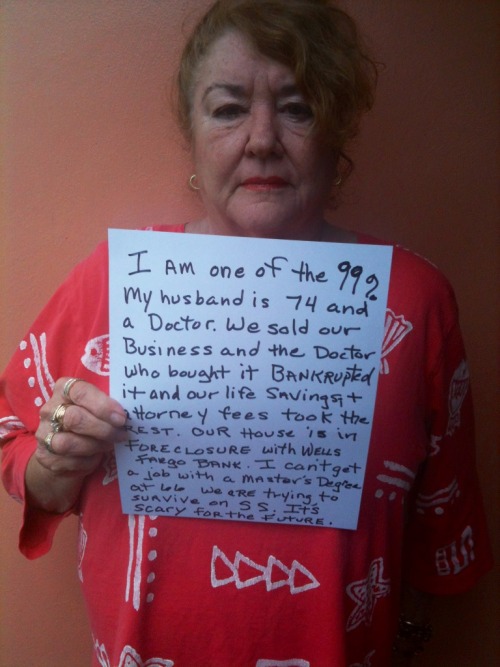
Even though ideally Americans feel like we are all equal, that doesn't mean we have equal opportunities. This is very evident when it comes to education. Although not limited to it, most of our future careers and life experiences will be some sort of outcome of our education, and while it should be equally provided to everyone, it's not. With the upper-class, many wealthy parents can afford to send their children to private and boarding schools, and they can even afford to send them to study abroad or on educational trips. Even with public schools, the quality of resources and amount of teachers available differs depending on the area. Our school is a great example of a school that has ample resources for our students, but we have to realize that not even all of the schools right next to our area have some of the resources we have. In regards to the middle class, they can also typically afford to choose which area to move to in order to provide their child with a good school district,and they typically can afford private tutoring as well. This isn't the case with the lower class, however, as they don't have the luxury to always choose where they want to live or afford any extra help for their child's education. And city public schools are notorious for having lack of efficient resources, possibly affecting how students feel about school and education in general, and even for those who do wish to do well in school don't get an equal quality of education. This is in the long-run can greatly affect the outcomes of children coming from different classes. Although there are always exceptions, school's with more status tend to aid students while planning on which college to attend, while students from other schools may have to try even harder in order to stand out in a school that isn't as well-known. Paying for college tuition also prevents many from even the middle-class from attending their ideal college, even with the possibility of receiving scholarships (which ties back to having to work even harder to earn those), while the upper-class don't necessarily have to worry about scholarships and paying for tuition.
Friday, November 16, 2012
It was interesting to learn about the different agents of socialization as I always thought of things associated with gender, school, and even media as common knowledge. However, I was able to learn that there is actually a difference in the way to view "gender" and how it differs with "sex" and "sexual orientation." It was a new perspective to think about how the students involved in the panel described their experience of not following the social norm of gender. Another new perspective I had was with media. I thought I was aware of how it affected people, and I never thought of it much because it never directly affected me as I'm not too concerned about how it defines beauty. But it was interesting to reflect on how it's affecting possibly other people, especially with younger children. Another agent of socialization that I never really thought about before was with gender and school. Even though I witness it everyday, I've never really reflected on how different genders are treated differently, whether it be intentional or not. It was interesting to see how gender roles in general were portrayed in society because I never realized how media shaped males and expectations to them, so it was interesting to see something from their point of view as well.
Sunday, November 4, 2012
It was interesting to read the various articles on different views on parenting and how that differently affects the future generation. Although there were many aspects of the "Nation of Whimps" article that I agreed with, such as kids are becoming more and more reliant on their parents and less likely to deal with pressures of becoming an adult due to parents being overprotective, some of the evidence used in it was also very extreme cases. The same also goes for the "7 Things" parenting article as although I agree with some points such as over-encouraging kids even when they are wrong, there are also some extreme cases that can go either way depending on the context/extreme such as the let your kid "be who they want to be" regardless of what others may think. The "Tiger Mom" article especially stuck out and connected with me though because I related to this style of parenting the most. Not to be steriotypical, but as my parents were both Asian, they're very strict and hold traditional values. Although they weren't as extreme as to not let me join sports teams or have sleepovers or what-not, they did in fact value school-work and responsibilities the highest. When I was younger and didn't do a homework assignment due to playing with my friends instead, my mom got angry and didn't let me have a birthday party even when it was only in elementary school. I was also forced to practice the piano and even would hide my books because I would get sick of practicing. But the work ethic they raised me up with has certainly been beneficial, and they've supported me with things that I actually wanted to do as well, so I definitely see the value in this style of parenting as well. Overall, there's some aspects of either parenting style that work well, and some that can be too extreme, but it was interesting to see just how vast the contrast was in some cases.
Friday, October 19, 2012
When I asked my dad about what he wanted/expected before I was born, I was actually pretty surprised by how simple his answer was. Other than the fact that he said that he wanted a boy (which I already knew from before), he said that he really didn't have anything specifically he wanted for me other than wanting me to be a healthy baby before I was born. When I asked him if I was more like him or my mom, he said that not only did I get a lot of my physical traits from my mom compared to my siblings, but also my personality. He said that compared to my sister, my personality and working habits were a lot more similar to my mom. And although he said that they did discuss discipline with my mom, he said it was pretty difficult when I was younger because my mom had a more "hands on" approach where she would discipline us on every little thing while he was more relaxed about it and allowed us to learn for ourselves when it came to the smaller things.
Thursday, October 11, 2012
As Americans, we aren't that used to going in depth to point out and study our own values, so it was interesting to read about the accounts regarding our values. Oddly enough, it was sometimes hard to differentiate American values with other values, as some seemed so typical like efficiency, while others were easier to really see the difference (equality of opportunity as not all countries can say the same). While reading Kohl's article, though, it was interesting when I came across certain values that I didn't particularly resonate with as it either didn't follow my religion or Korean culture. For example, I can't say that I'm a very casual person with adults, especially Korean ones and ones that are particularly older as I'm used to treating adults with respect and speaking formally with them as there's a sense of hierarchy towards authority in Korean culture. And although I agree with the fact that we don't stay stagnant in times of trouble and do work hard for our improvements, religion-wise I can't completely say that I only rely on myself and my capabilities. It was also interesting to see another point of view that wasn't Korean or American in the article from the German man's account of American culture, and although it was slightly dated, it was interesting to see such a contrasting thought with what we as Americans perceive as so normal.
Subscribe to:
Comments (Atom)